Wardrobe on Purpose logo
introducing the wardrobe reality map

It’s time to see what your real life actually looks like.

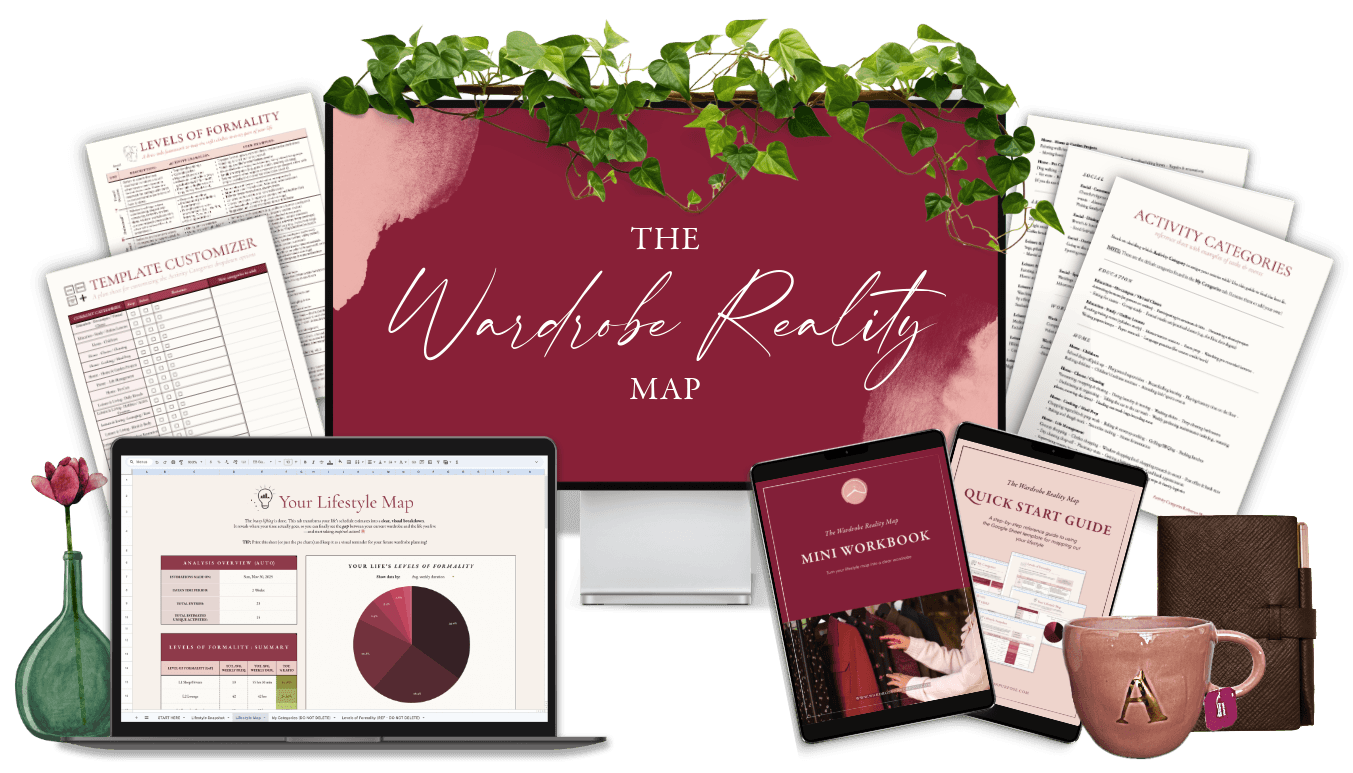
The Wardrobe Reality Map is a Google Sheet template that shows you in real numbers and visual charts, exactly what your life actually consists of, so that you can start shopping for the life you have NOW (and not your imagined fantasy life!)
be honest.....

Does your wardrobe feel like it belongs to someone else?

You stand in front your closet and something feels off. A quiet disconnect, maybe even a flicker of failure. There’s plenty there, and yet, most of it never gets worn.
You’ve probably tried to fix it. Or at least thought about it. Maybe more than once. But something always gets in the way:
  • The fresh start that didn’t stick: You cleared out, bought “better” basics, set up the ideal wardrobe. But within a few months, you were back in the same place. You have a seemingly well-edited closet, and still nothing to wear.
  • Talking yourself out of your own needs: Feeling like you shouldn’t need more loungewear (despite spending most of your time at home), so you keep buying dressy clothes you never reach for. Or that you shouldn’t need to dress up (even if a social event requires it), so you keep showing up underdressed and uncomfortable at formal settings.
  • The personal style rabbit hole: You took a “personal style first” approach. You studied what you liked, identified your favorites, built a whole aesthetic. However, translating it into clothes that actually work in your real, everyday life got too complicated to follow through.
  • Analysis paralysis: Every piece of advice leads back to the same tedious method — log your days for two weeks, calculate the ratios, draw a pie chart by hand. So you never start and the closet stays exactly as it is.
Sound familiar? You’re not alone in this. Luckily, there’s a simpler way forward, and it starts with understanding what your life actually looks like.
and then...

What changes once you can see it

The Wardrobe Reality Map won’t build your wardrobe for you. But once the pattern is visible, a few things tend to shift right away:
The mornings feel different. You reach for something without the usual back-and-forth about whether it’s “appropriate.”

You spend more money on loungewear without the guilt, because now you know it has earned its place in your wardrobe.

You stand in a store and know exactly what category you’re actually shopping for, instead of buying anything that catches your eye.
Ink splatter brown large top left
here it is...

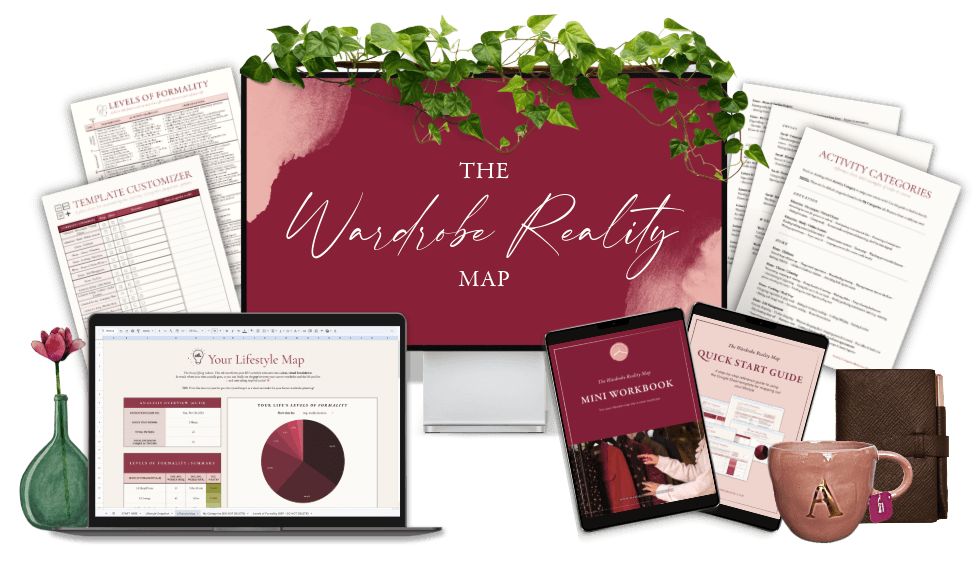
The Wardrobe Reality Map

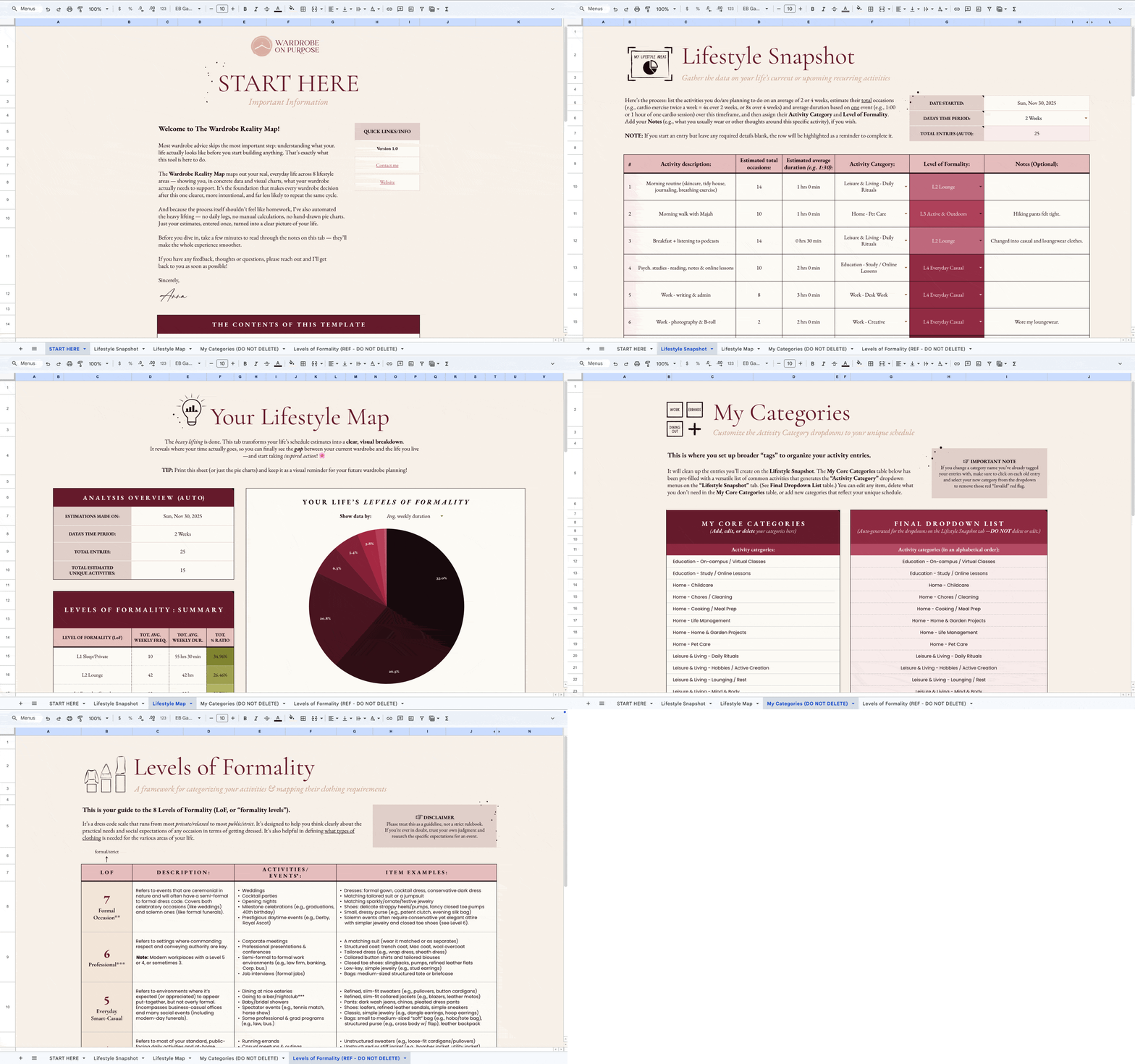
A Google Sheet template that turns your real, everyday life into a clear, visual map plotted across 8 areas that range from casual to formal dress requirements. You’ll get the proof, validation and inspiration you need to finally see what the life you are actually living calls for.

Here’s what makes it different from anything you’ve tried before:

It’s quick and built on smart estimation

The standard advice: log every day for two weeks, tally everything by hand, calculate the percentages yourself. Sounds reasonable until you try to actually do it. The Wardrobe Reality Map works differently. Spend 10-15 minutes entering your typical activities across a 2-week or 1-month timeframe, and the spreadsheet handles everything else: the calculations, the ratios, the charts. You’ll discover why your wardrobe isn’t working and where the gaps might lie, all at a glance!

It’s built on a framework that works

Most wardrobe advice groups your activities into vague buckets like “work” and “casual,” which tells you almost nothing useful. This tool organizes your recurring activities across 8 specific Levels of Formality, from informal dress codes to stricter dress requirements. It’s a structured, logical lens that pinpoints where the gap between your wardrobe and your life is sitting. And also why it keeps happening again no matter how many times you declutter or buy new, supposedly better pieces.

It gives you the data to finally let go

This is perhaps the part that matters most. The numbers on the dashboard become your permission slip: permission to let go of what you don’t need, and permission to finally spend on what you do — the loungewear, the sleepwear, the things you’d been quietly telling yourself weren’t worth the money.

It’s designed to be read in seconds

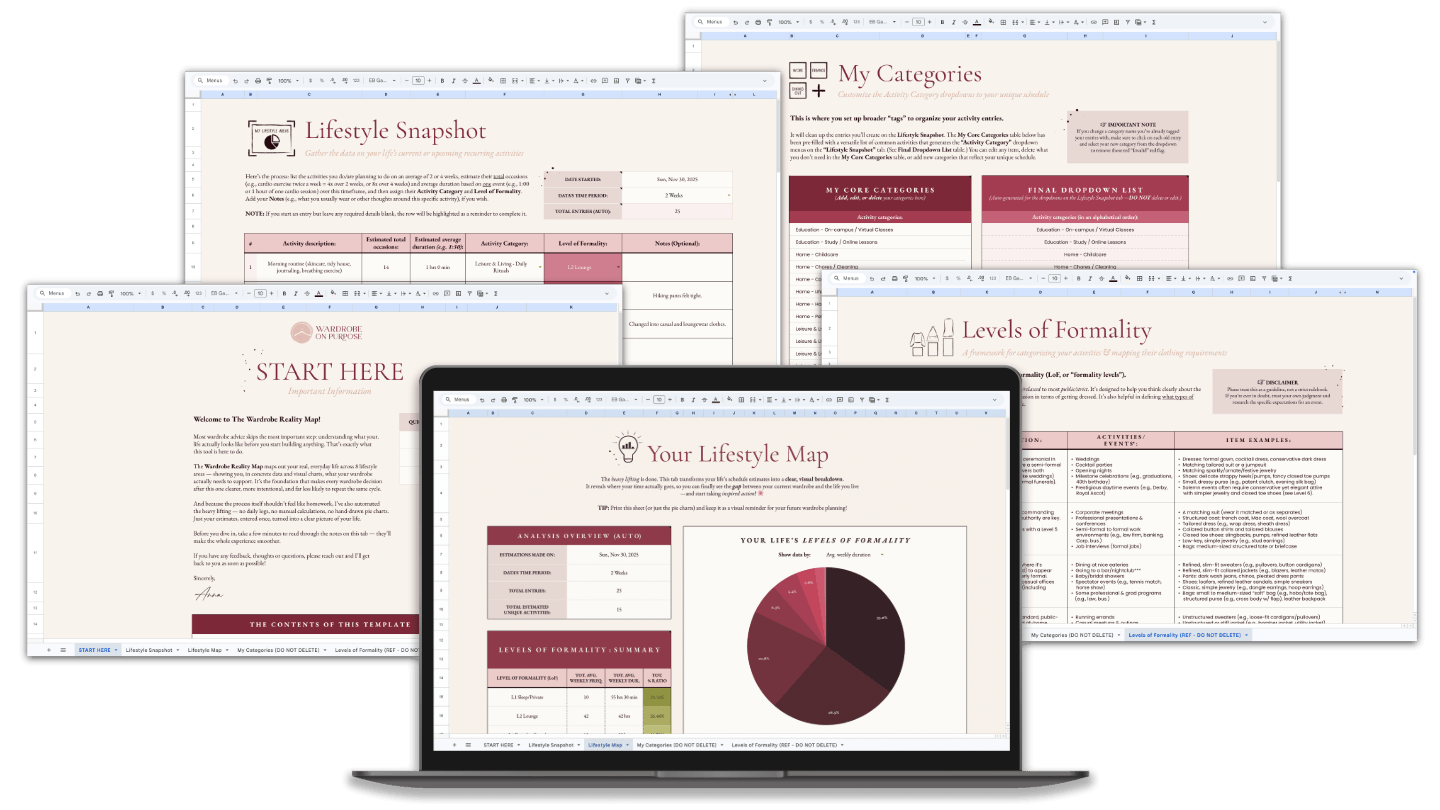
Numbers alone don’t change much, but seeing the pattern does. The moment you finish entering your activities, the dashboard turns your entries into organized tables and clear visual charts. No need to fiddle with 2 week logs, calculating ratios and drawing wonky pie charts by hand. You instantly see where your time actually goes, which is what makes it easy to spot exactly where your wardrobe and your life have drifted apart.

Here’s how you’ll turn your lifestyle into a visual map

This is an estimate, not a log. So you won’t be tracking your days in real time. You’ll sit down once, think through a typical stretch of your life, and enter what you find. Here’s the actual process:
step 1

list your regular activities

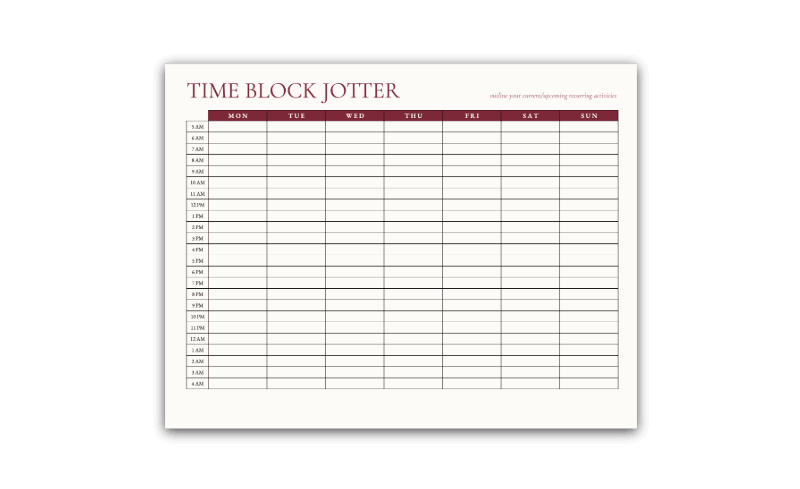
Everything you do on a regular basis matter: work, workouts, school runs, date nights, hobbies, errands. If it’s easier to see it laid out first, the Time Block Jotter (included) gives you a blank weekly grid to sketch it out before typing anything in.
step 2

estimate how often each one happens

Give each activity a rough count based on your chosen time frame (2 week or 1 month schedule): hot yoga once a week, dog walks twice a day, date night every other Friday, and so on.
step 3

estimate how long each one usually lasts

It’s basically the same approach as the previous step: type in roughly how long each activity takes on average. An hour for hot yoga, thirty minutes for the dog walks, that kind of estimate.
step 4

tag each one by formality & category

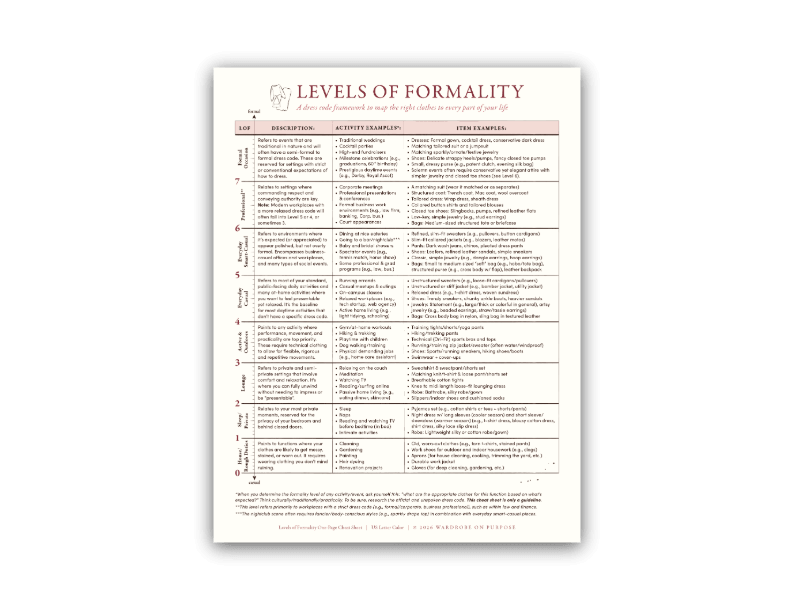
Every activity gets slotted into one of the 8 Levels of Formality, from rough housework to black tie events, plus a category like Social, Work, or Leisure & Living. The included Levels of Formality Cheat Sheet makes this step quick.
step 5

the dashboard does the rest

The moment you’ve entered your activities, the dashboard calculates and visualizes everything for you, giving you a real picture of your lifestyle. No complex calculations or pie chart by hand required.
And that’s it! If your schedule is irregular enough that there’s no “typical” week to estimate from, that’s covered in the FAQ further down this page.

Who is this for?

It’s for anyone getting ready for a real, intentional overhaul, who wants to start with an honest picture of the life they’re actually living, so nothing gets bought, kept, or let go of based on a guess or imaginary idea.

But it’s especially right for you if:
  • You’re stuck wearing the same things on repeat (even if your closet is full): You know this, but every attempt to fix it hasn’t stuck. That’s because you’ve been treating the symptom, not the cause.
  • You’re buying for a past or imagined self: Your wardrobe reflects who you were, who you wish you were, or who you thought you’d become. Getting dressed every morning quietly (and painfully) reminds you of the gap.
  • You have an analytical mind: You need to see the data before you can make a move. Logic is your entry point, and once you have the numbers, you can act.
  • You’ve been through a real shift: A new job, a new city, a new stage of life, a new body. Your closet is still built for who you were before, and you haven’t caught up with the changes.
  • You want a reason to let go: Not just permission to declutter, but concrete, visual and undeniable proof that the clothes you’ve been holding onto don’t belong in your life right now.

What’s included ?

You’ll receive the core tool, the Lifestyle Mapping Template. It includes key sheets that help you accurately and quickly map out your lifestyle, such as:
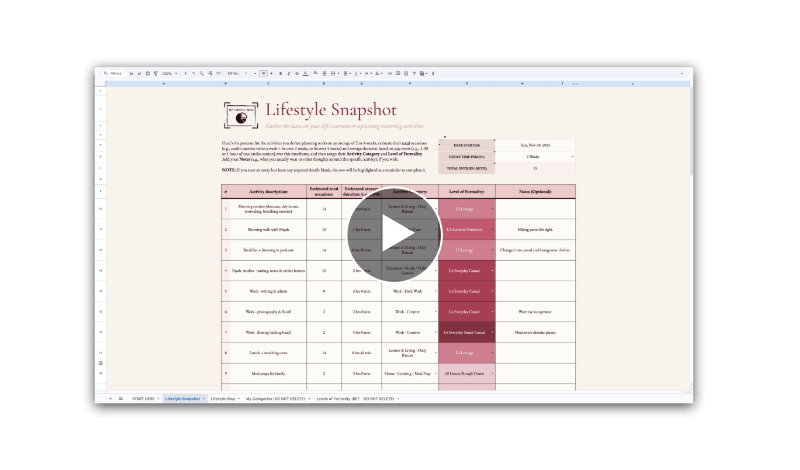
  • The Lifestyle Snapshot: The auto-calculating Google Sheet inside the template. Enter your typical activities across a 2-week or 1-month window, and let it calculate and organize everything for you.
  • The Lifestyle Map: A built-in visual dashboard that instantly shows where your time actually goes, broken down by Level of Formality (think in terms of general dress codes and requirements) and activity category. You’ll finally see why you “never have anything to wear,” and exactly where your day-to-day life and your closet have drifted apart.
You’ll also receive a set of supporting resources to help you use and make the most out of the template:

Walkthrough videos

I’ll walk you through the template step by step, from opening the sheet to reading your finished charts. Handy if you’d rather watch someone do it once than figure it out cold.

Mini workbook

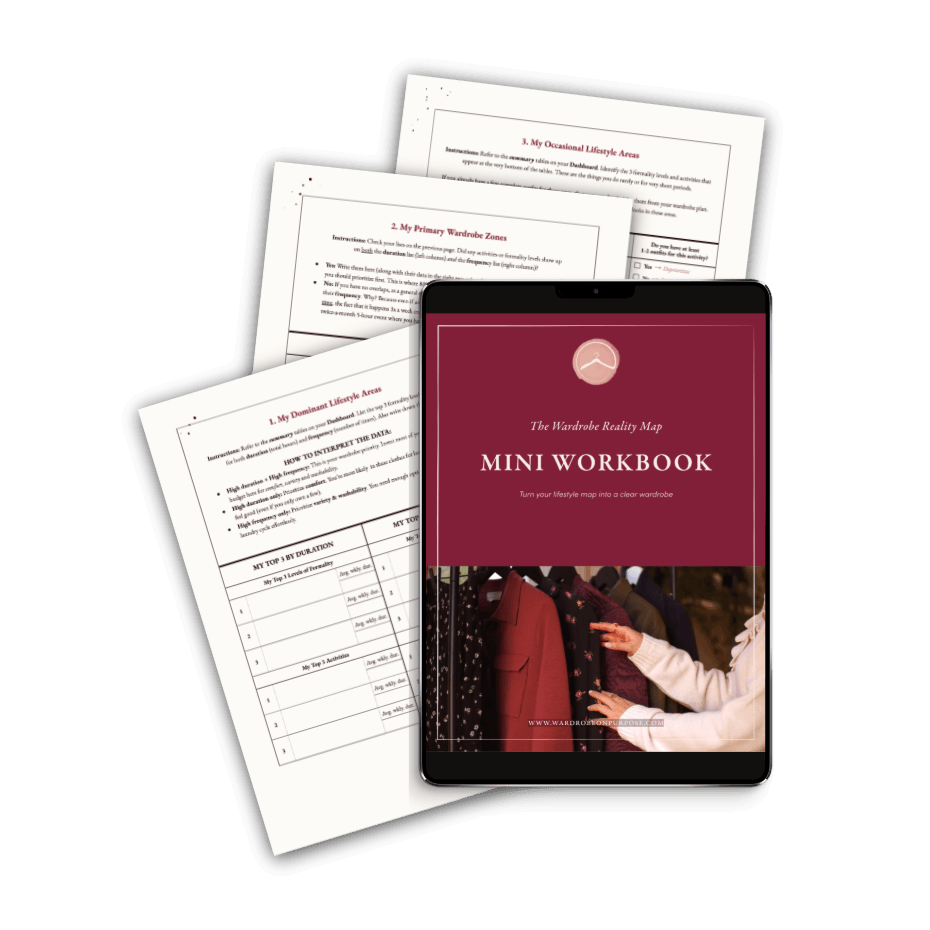
A 3-page workbook that turns your dashboard numbers into a clear starting point. Using only your lifestyle data (no closet inventory required), it shows you which formality levels and activities deserve your attention first, which deserve a second look even though they’re less frequent, and which ones you can safely leave alone for now.

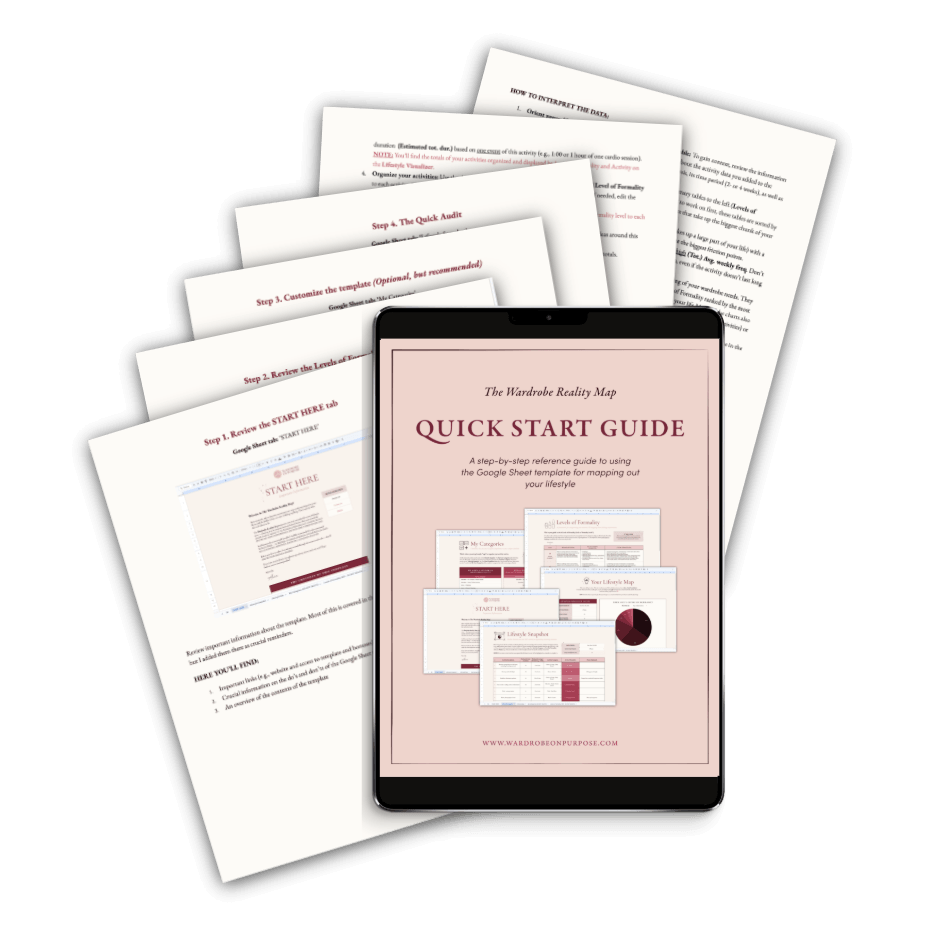
Quick Start Guide

A step-by-step reference sheet so you can open the template and know exactly what to do, without having to figure it out as you go.

Levels of Formality Cheat Sheet

A quick, visual guide with examples of each formality level so you’re never confused about dress codes and what types of clothes to buy.

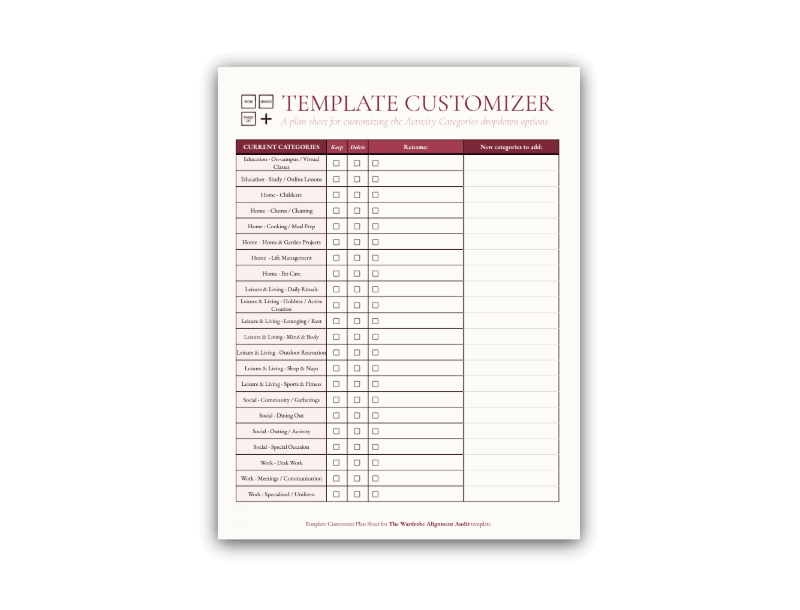
Template Customizer Plan Sheet

A worksheet to help you adapt the template’s default activity categories to fit your specific life, so the data reflects your reality, not a generic one.

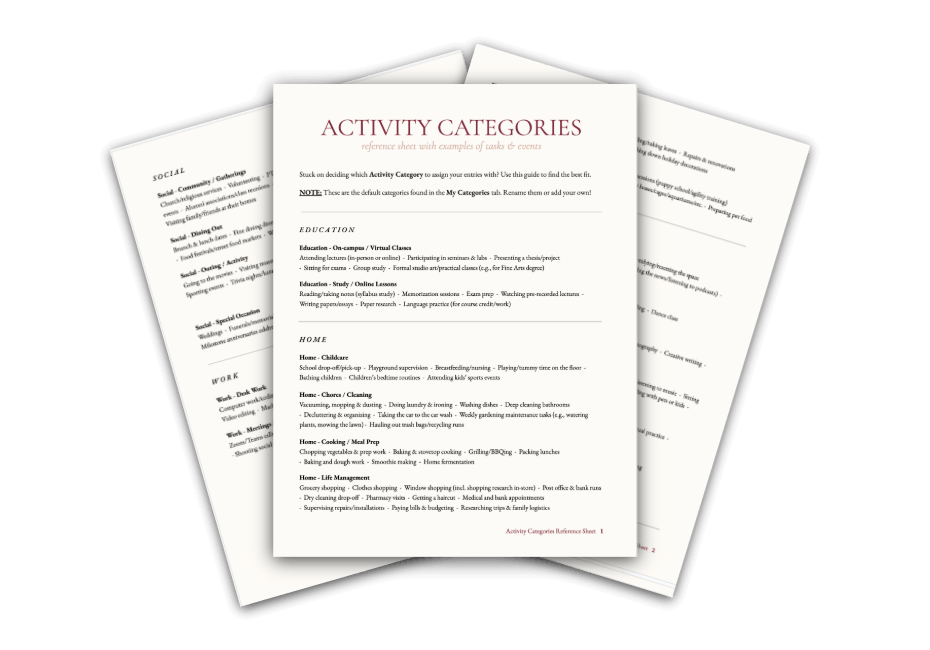
Activity Categories Reference Sheets

A 3-page sheet that lists example tasks and events for every default category, so you always know exactly where each activity belongs — and your dashboard data stays accurate.

Time Block Jotter

A weekly grid, broken down hour by hour. It’s a place to get your typical schedule out of your head and onto paper, in one sitting, before you translate it into the template.

Frequently Asked Questions

Most wardrobe frustration comes down to one root cause: your wardrobe was built around a life you don’t actually live. Whether that’s shopping for a more formal, more glamorous, or simply different version of yourself, or holding onto clothes from a chapter that has already closed, the result is the same. A full closet or even an ideal wardrobe set-up with all of the right pieces that doesn’t serve you.

Analyzing your lifestyle is what breaks that cycle. It gives you the logical clarity to see, in concrete terms, exactly where the mismatch lies — and why no amount of decluttering and new clothes have fixed it completely.

But just as importantly, it acts as an emotional permission slip. When the data shows you that most of your life happens in casual or home settings, you stop arguing with yourself about what you should need, and you start building around what you actually do.

That shift, from “what I wish my life looked like” to “what my life actually is,” is the foundation every good wardrobe decision needs to be built on.

This tool was designed to be the fastest meaningful alternative to traditional lifestyle analysis methods. So no two-week activity logs, no manual calculations, no hand-drawn pie charts!

Here’s a realistic breakdown of what to expect:
  • 10–15 minutes to fill out the Lifestyle Snapshot inside the template with your typical recurring activities, either from memory or with a quick glance at your calendar.
  • 20–30 minutes to review your Dashboard results and work mini workbook that helps you translate the data into a wardrobe strategy. If I’m being honest, even the exercises in the workbook aren’t a must. I built dashboard to be as self-explanatory as possible so that you can get a quick understanding, at a glance, of what occasions your life consists of.
  • 5-10 minutes to go through the Quick Start Guide and any supporting materials included with your purchase.
In total, expect to spend around an hour on the full process. It’s not instant, but it is a short burst of effort that saves you from years of repeating the same cycle.

All you need is a free Google Account. The tool is built in Google Sheets, which allows it to be interactive and automated. It’s also the only way you can make a personal copy of the template that is 100% private and customizable. Also, most of the bonuses are accessible in Google Doc.

And while you can view the spreadsheet on your phone, I highly recommend using a laptop or desktop for the entire lifestyle analysis process to make typing in your entries and interpreting the data a breeze.

Unfortunately, no. This spreadsheet was designed for Google Sheets and will not function in Excel. While Google Sheets and Excel are pretty similar, there are differences in their formatting and how formulas are set up.

Absolutely. You don’t need to be a math person or a spreadsheet pro to use this. I’ve handled all the complex formulas in the hidden back-end. You simply fill in the blanks. Plus, the Quick Start Guide included with your purchase walks you through every single tab in the template, so you’ll never feel lost.

That’s exactly what the Time Block Jotter (included) is for. It’s a printable hour-by-hour weekly grid, so you can sit down once and sketch out your typical week before typing anything into the template. You don’t need perfect recall, just a rough sense of your regular schedule: when you work, when you walk the dog, when yoga practice is.

Less precise, but that’s not actually the goal here.

A two-week log gives you an exact record of one particular fortnight, but most people’s lives don’t swing wildly from week to week, so that extra precision rarely changes the overall picture.

Smart estimation is built to get you close enough to see clearly, close enough to know that 60% of your time happens at home, or that only 8% of your month calls for anything formal. That level of clarity is what actually changes how you shop.

If you want exact numbers down to the hour, a two-week log will get you there. For this exercise, a rough, honest estimate is enough to show you the pattern, which is the actual goal.

The Lifestyle Snapshot exercise inside the template works well even with some week-to-week variation, since you’re estimating a typical pattern, not tracking exact days. Most schedules, even busy or shifting ones, have enough of a pattern to estimate from.

If you’re not sure whether yours counts as unpredictable, it probably doesn’t. This really only applies to genuinely irregular schedules, rotating shifts, freelance work with no set hours, alternating custody, where there’s no typical week to estimate from at all.

In that specific case, The Wardrobe Clarity Roadmap includes a full activity log instead of an estimate. But for almost everyone else, The Wardrobe Reality Map’s estimate is accurate enough to work from today.

Yes. Estimate the activities you expect that chapter to include, whether that’s retirement, a new job, summer vacation, or becoming a stay-at-home parent. It won’t be based on memory, but if you have a reasonably clear sense of what the new routine will look like, The Wardrobe Reality Map still works.

Every activity you log gets two tags: a Level of Formality and an Activity Category.

Level of Formality is the “what should I wear” tag. It places each activity somewhere on an 8-level scale, from the most relaxed (rough housework, sleep) to the most formal (black tie events, professional work environments), so the dashboard can show you exactly how much of your life sits in each dress-code zone.

Activity Category is the “what kind of activity is this” tag. It groups similar tasks together, like “grocery shopping” and “picking up packages” under “Home - Life Management,” so the dashboard can also show you patterns by activity type, not just by dress code.

Together, the two tags are what let the dashboard tell you not just how formal your life is, but what’s actually driving that formality. You might find social activities dominate your smart-casual hours, while work is what’s pulling you into more professional/business casual territory. These are two different priorities a single formality number wouldn’t reveal.

You don’t need to memorize either system before you start. The Levels of Formality Cheat Sheet and the Activity Categories Reference Sheets included with your purchase walks you through all 8 levels with concrete examples, so you’re never guessing.

Not directly — and that’s intentional.

The Wardrobe Reality Map covers the essential first step that most wardrobe advice skips entirely: understanding what your life actually requires before you start building anything. It won’t hand you a shopping list, but it will show you exactly which dress codes and activity areas your wardrobe needs to be built around. This is the clarity that makes every next step easier and more accurate.

Think of it as the foundation. Without it, any capsule wardrobe you build is still just a guess.

That said, if you need help with the wardrobe-building part, I have two more products in the works: The Wardrobe Clarity Roadmap, which turns your lifestyle map into a prioritized plan for what to tackle first, and a capsule planning toolkit (I haven’t given it a name yet!) that helps you work out the details for each one, colors, mixing and matching, and all. Subscribe to my newsletter to be the first to know when they're ready.

If you have any questions, I’m just one email away ([email protected]). I’m happy to answer any questions you have, and usually reply within 48 hours.

Due to the digital nature of our products, I do not offer any refunds. If you have any questions or concerns about your order, please reach out to [email protected]

At $17, this is a small investment that's very easy to justify — especially when you consider that the next “wrong” purchase you make will almost certainly cost you more than that. The Wardrobe Reality Map is designed to help you stop making those purchases by giving you a clear picture of what your wardrobe actually needs, before you spend anything.
Have any other questions?
Contact me and I’ll be happy to answer!
a note from Anna

How this template
came to life

For a long time, I did what most wardrobe advice tells you to do: log your days for 14 days, tally it up, draw the ratios by hand in a pie chart. It worked, the data was useful, but I dreaded every part of the process.

The problem was never the idea of understanding my lifestyle. It was that the method felt like homework. So I started building it in Google Sheets instead, letting the spreadsheet handle the calculations and the visualizations automatically. What started as a personal shortcut became something I relied on every time I did a wardrobe overhaul.

But seeing my life laid out in actual data did more than save me time. It showed me that most of my week was spent at home, lounging, or outside training my puppy, not in the polished, dressy pieces I kept gravitating toward in stores. Every time I felt the pull to buy another polished piece, I could stop and remind myself: “I don’t need it, I need better loungewear and outdoor gear instead.” That’s the kind of clarity my own reasoning never quite gave me on its own.

That’s what I want for you too. Not just a faster process, but a clearer one. One that gives you the proof you need to stop arguing with yourself and finally see what you life is actually asking for.
Profile image

Ready to stop guessing what your wardrobe actually needs?

Here’s a recap of what you’ll receive:

  • My Lifestyle Mapping Template, an automated Google Sheet template that clearly maps what type of occasions your actual life consists of.
  • Step-by-step video walkthroughs so you’re never stuck wondering if you’re doing it right.
  • BONUS 1: The Mini Workbook: A 3-page workbook that turns your lifestyle data into a clear starting point, showing which areas and activities deserve your attention first, based purely on how much of your actual life they represent.
  • BONUS 2: The Levels of Formality Cheat Sheet: A quick, visual guide to the 8 levels of formality to help you categorize your activities by concrete dress codes.
  • BONUS 3: The Template Customizer Plan Sheet: A sheet to help you customize the template to your unique life and schedule.
  • BONUS 4: The Quick Start Guide: A step-by-step reference sheet to help you quickly use the spreadsheet without getting stuck.
  • BONUS 5: Activity Categories Reference Sheet: A 3-page sheet that lists example tasks and events for every default category, so you always know exactly where each activity belongs and your dashboard data stays accurate.
  • BONUS 6: Time Block Jotter: A simple hour-by-hour weekly grid to jot your typical schedule down first, in one sitting. No ongoing tracking required.

Buy it for $17

disclaimer

When you purchase this product, you’ll receive a welcome email where you can access the template and resources. You will need internet access and a Google Account. If you do not have a Google Account, you can create one for free at Google Sign-Up.

Please note that the template is not an Excel file. It is designed in Google Sheet. The other resources (except for the Levels of Formality Cheat Sheet, which is a PDF file) are designed in Google Doc. You will need to create a copy of these files and save them to your personal Google Drive.

This is a personal use only product and cannot be used commercially, resold, or redistributed. Please respect the copyright.

All downloads are non-refundable as this is a digital product. No physical items will be shipped.

If you have any questions or issues, please email me at [email protected].

Intentional wardrobe curation made effortless
stay in touch
Privacy Policy | Terms of Use
© 2026 | Wardrobe on Purpose. All rights reserved.